
Midwest Gothic
Hauntology, gas stations, and rural America

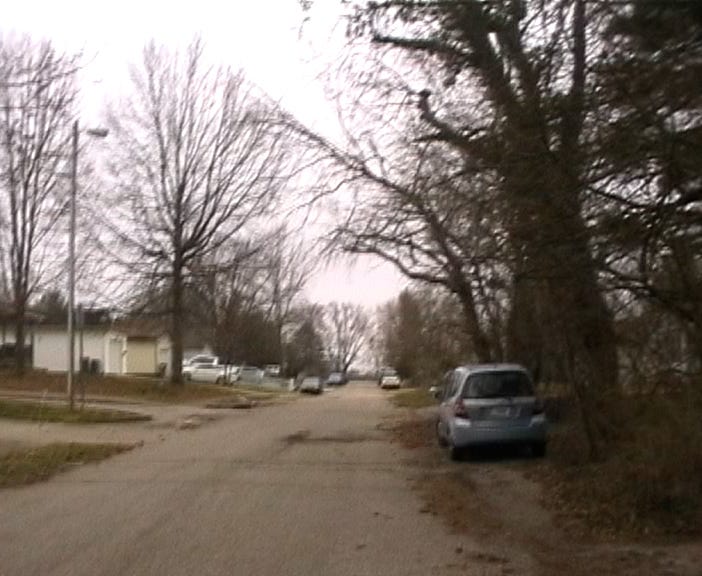
Being from North West England, the American Midwest has a particular hold on me. This hold confuses Midwestern residents for good reason. It makes no sense why someone who could be living in Manchester or London would prefer a tiny town in Wisconsin or Illinois or Indiana. They sometimes look at me as if asking if I’m okay. If I have maybe lost my mind. And whilst I understand the multitude of reasons they are saying this, similar reasons as to why I would maybe say the same thing to a foreigner moving to Merseyside, UK out of choice, the sensation that tops all negatives is simple:
Using the restroom in a seedy gas station in the middle of literally nowhere, 50/50 on whether there is a hidden camera. A grubby dive bar where people don’t talk to you, just grunt. The sun setting behind a cornfield that seems to go on forever. A parking lot occupied only by a dead opussum and a rusty Toyota.
These scenarios and settings make me feel more alive and in tune with the world than a small plates restaurant or being in the queue for a Dover Street Market archive sale. And it also reminds me of home, walking around an almost-derelict shopping district where every building is one of three things: A betting shop, a pawn shop, or a knock-off Greggs. I thought I wanted to leave the UK because of that. I thought that every time I passed a Gold4Cash, my spirit would shrink smaller and smaller. That people would be able to sniff me out in a room and tell that I wasn’t important enough to be there, and I would be rejected from their very Chic and Relevant circle of Hell. But this was a mixture of ‘internalised classism’ and plain confusion, because even when I walked around the grey, moody streets of Birkenhead with my headphones in listening to The Smiths, I was actually getting bigger. Growing up in this type of place can make you resilient if you let it, and not to mention becoming a master of maladaptive daydreaming.
So, the Midwest seemed a natural progression: get away from it all by going to its larger cousin, where it’s hotter in the summer, the cigarette packets are pretty, and you can eat Red 40.
The Gothic of the Midwest, as well as the rest of non-metropolitan America, is distinct. It’s not a foggy hill with a crow on a crooked tree where you can easily identify the reasons you are drawn to it (the mesmerising brutality of nature, the Kantian Sublime); instead, there is an essential theme of contemporary and discarded human presence: empty fast food wrappers accumulating in a corner, an abandoned car, an empty building where people used to work that has signs of once being on fire. You are faced with the past, present, and the future all at once. You are sad because of the litter; you hope whoever owned that abandoned business is doing okay, and yet you still reach for your camera to snap a picture because what you’re feeling right now is otherworldly. All these elements coming together perfectly define the world as you know it: disintegrating, grim, but somehow still here.
Mark Fisher, one of the most important cultural theorists and bloggers of our time, can help us understand why we are drawn to this bleakness in his book The Weird and the Eerie, as well as his expansions of Jacques Derrida’s idea of ‘Hauntology’.
When I first heard the term Hauntology, my ears perked up because I love ghosts, and it was a pleasant surprise that, for once, I was not disenchanted by a word that sounds cool but really is about something else - Hauntology is about ghosts. Real ghosts, the type we live with every day, all of us. No matter what.
Derrida’s idea of Hauntology is a portmanteau of Haunt and Ontology. It is the past that lingers in our present, which in turn reminds us of a future we were promised that never arrived. For example, think of the fantastical depictions of sci-fi from the mid-20th century: sleek, utopian, retrofuturistic worlds where everything is clean and sparkly. You have a little cute robot butler who does all your chores so you can drink delicious neon green cocktails with your tall, handsome husband. You can also live forever whilst staying smooth-skinned and skinny.
Of course, this is not what the 21st century ended up looking like. Whilst medicine has progressed, airlines are safer, and Ozempic can make you not fat, we are very far away from an ideal world, particularly the one we were promised. Some may argue that in certain parts of life, we have even regressed. So, these broken promises haunt us in films, television, music, architecture, our phones, every time we open our eyes and engage with whatever we’re doing in 2026. These ominous presences can be found in reboots of classic films, the revival of physical media (the lo-fi grain of a camcorder, the crackle sound of a record player, the soft glow of a film photograph), and a fashion cycle that mashes together decades (60s haircut with a Y2K anime girl dress, a la Ashley Williams).

In the words of Mark Fisher from his essay ‘What is Hauntology’ in Film Quarterly:
“What haunts the digital cul-de-sacs of the twenty-first century is not so much the past as all the lost futures that the twentieth century taught us to anticipate.”
He continues:
“More broadly, and more troublingly, the disappearance of the future meant the deterioration of a whole mode of social imagination: the capacity to conceive of a world radically different from the one in which we currently live. It meant the acceptance of a situation in which culture would continue without really changing, and where politics was reduced to the administration of an already established (capitalist) system. In other words, we were in the ‘‘end of history’’ described by Francis Fukuyama.”
I believe this is the best explanation for the political, social, and mainstream artistic stagnation we are living in.
(^ This all being said, I recommend reading Mark Fisher and Derrida’s Hauntological works if you haven’t already, as they obviously discuss it in ways I could never get close to in a Substack post. And they are also geniuses lol. RIP Mark Fisher I love you).

If you are under the age of, say, 30, it may have felt like you have been at the ‘end of history’ for your entire life. When I listen to people who experienced their prime youth in the 60s, 70s, 80s, and 90s, there is a glint in their eye that is often absent from the Zoomers of today. Whilst this could be considered plain nostalgia, as history is filled with inhumane horror (obviously), I don’t think the dissonance between people who fully experienced the world pre-21st Century and Millennials/Gen Z should be dismissed as simply elders being blinded by nostalgia, forgetting the wars they lived through, or the poverty they experienced, etc. Technology is destroying the parts of life that make it livable, such as the daily in-between moments where you are required to engage in situations that aren’t immediately catered for you by an algorithm or AI.
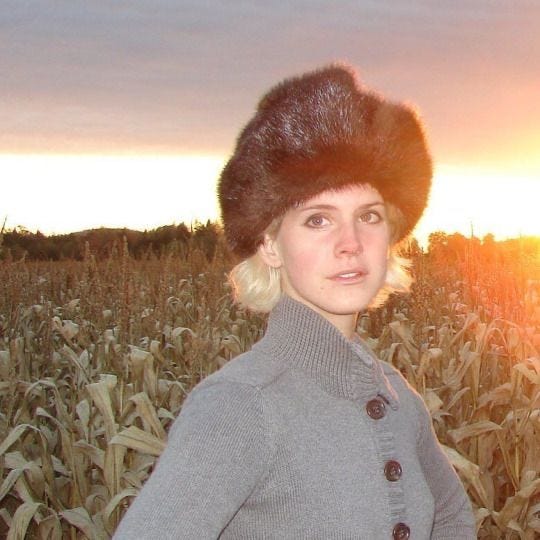
This is why Gen Z is making countless moodboards on Pinterest containing images of abandoned motels titled ‘Southern/Midwestern/Americana Gothic’. This is why Ethel Cain sells out her shows even though her music is mid (Sorry. It’s the Vibe that sells, which is fine!). This is why Trailer Trash Lizzie Grant is more cherished than Hollywood Perfect Lana Del Rey. What do all these things have in common? They are all rustic, sweaty, lived-in, and void of tech. They are exorcising the ghosts of the idealised past we (we being people under 30 who didn’t grow up on a farm) never got to experience but hear so much about. They are ghosts upon ghosts upon ghosts, and what is more satisfying than having your paranormal experience validated as real?
So, when you look at the seedy, grubby gas station in the middle of nowhere, the rusted Coca-Cola sign, in its vintage cursive font, makes you mourn for a time when this logo wasn’t rusted, and you could have optimism that large corporations possibly did have something good to offer to your life. You may not have been alive at this time, but it doesn’t really matter when we are fed the past through a lens of nostalgia, to the point that we almost have false memories of being a 1950s housewife or something.
But why are all these ghosts American?
America dominates popular culture, which is one reason. But another can be described by another quote from Mark Fisher (he has all the answers): “‘Rock and roll needed the endless open highways; it could never have begun in England’s snarled-up ring roads and claustrophobic conurbations.” (The Weird and The Eerie, pg 35). Here, Fisher discusses the Manchester-based band The Fall and their relation to the grotesque. A band like The Fall couldn’t have been born out of any other place than North West England in the 1970s, just like a musician like Lana Del Rey couldn’t have been born out of any other place than America. England is (other than its gorgeous countryside, which is traditional Gothic) small and cramped. It is very rare for you to feel close to freedom, freedom in the spatial sense. As if you could just disappear one day into the woods or the corn field. In England, if you decided to try to disappear, it wouldn’t be long until you ended up at a Tesco Express or a McDonald’s or a hideous, newly built housing estate. You will never have the luxury of getting lost there.
As a depressive teenager, sometimes I would think about emptying all the money I had at an ATM and running away. But by the time I had packed a bag and deleted my computer’s search history, I remembered where I was and put my clothes back on my bedroom floor. I had forgotten that I wasn’t near the Badlands like all the films I’d been watching. I was in grey, tiny England. The vastness of America can leave you with hope even in the worst times. Not the politics but the landscape. It makes you feel that if it got really bad, there would be somewhere isolated, just for you. I believe the American Gothic, the one depicted online, is the closest some people can get to the feeling of ‘living alone in a cabin in the woods’ that we daydream of. When we are looking at these images of isolated decay, we are not only appreciating its aesthetic value, but at the same time, we are envisioning an alternative world where we never had a phone, as well as accepting the broken down environment that waits for us rather than the utopia we were promised.
Here is a list of Midwestern / Southern / Americana Gothic films:
The Starling Girl (2023)
Hick (2011) (people hate this one but I think it rocks. The book too)
Winters Bone (2010)
Badlands (1973)
Boys Don’t Cry (1999)
Children of the Corn (1984)
The Straight Story (1999)
Mysterious Skin (2004)
Gummo (1997)
Wise Blood (1979)
have you read dark places or sharp objects by Gillian Flynn? she writes about Missouri in similar ways which i think you might appreciate
This is so incredibly well written Charlotte!! I’m tweaking out over the fact that I’m not at a seedy dive bar in Indiana rn, and also have been exploring hauntology in my research and love your interpretation on the gothic midwest! 🙂↕️